


Export of handicrafts to Japan: Adaptation to tastes
According to statistics from the Vietnam Handicraft Export Association, there are about 1,350 trade villages in Hanoi, of which over 60% are handicraft villages with annual production value. The export value is over $ 100 million and creates regular jobs for hundreds of thousands of workers and nearly one million seasonal workers. Potential is, but businesses producing handicrafts, furniture ... still struggling to find a way.
Weak design, design
According to the survey of the Vietnam Chamber of Commerce and Industry (VCCI), as well as the assessment of many domestic and foreign experts, handicrafts, furniture, decoration ... export to Japan in particular, Foreign markets are generally weak at two stages of market information and product designs.
Enterprises or craft villages mainly process orders for foreign parties, while the designs of designs and models account for more than 1/3 of the value of products. Katsumi Taki, a product design specialist, said, "There are three main factors involved in the design, colors and materials used to make a product. We have to understand the culture of the region, the climate, the characteristics of the market we choose, which will create the unique and unique of the product, stimulate customers to spend money to buy products.
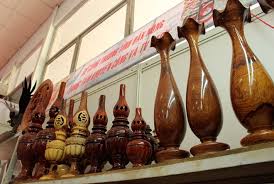
For example, the craft village has been unveiled in Japan, but a Japanese company is determined to restore, maintain and develop this product with creativity in design, design and color. , size and functionality (floor coverings, wall hangings, decorations, wall stickers ...), should be favored in Japan and many other countries around the world. This uniqueness brought the revenue of ¥ 6 billion a year for the projection product. Or from watching the chicken ranch helped Mr. Katsumi Taki design a flashlight lamp used in many restaurants and hotels.
The Japanese are very concerned about forms, utensils and utensils not only for use but also as decorations, besides the quality factor, such as durability, factors affecting health, lip The current trend of responsible consumers in Japan and other developed countries is to buy sustainable, environmentally friendly products in which hand-made products are an advantage. Because industrial products are often cheap, the same pattern. New, unique, useful and environmentally friendly handcrafted products are a great advantage of competition, not price.
"Hit" hits the Japanese style
According to the Vietnam Trade Office in Japan, the demand for imports of Japanese handicrafts is huge (about $ 2 billion a year) because Japanese people have a habit of giving gifts everyday and on holidays. Annually, export turnover of handicrafts (including: mosaic wood, inlaid, products made from straw, paper grass or other kinds of plaiting materials, plaited braids and articles of plaiting materials, rattan, wicker, porcelain and pottery) of Vietnam to Japan reached about 54 million USD, accounting for 3% of turnover of Japanese handicrafts.
Comments from Japanese business experts show that Vietnamese crafts are still poor in style. Vietnamese artisans have skillful hands but "thinking, vision is still only around the village, outside the commune ...".
Japanese designer consultant Shinichi Yamamura has visited Vietnam three times to exhibit handicrafts, saying that the strength of Vietnamese artisans is to protect traditional products. Many products have impressed the importers.
However, "If artisans only make products according to their perception, they do not boldly exploit new products, it is very difficult to bring their products abroad. Work on two things: to protect the old product, to design new products, even if it does not have money right away, but in the long run, it will determine the survival of the craft. "
And Yoko Kawaguchi, President of the Japan Association of Cooperatives, said: "In order for Vietnamese craftsmen to enter the Japanese market, handicraft enterprises must pay attention to their habits, The biggest problem of Vietnamese artisans is still the style: Japanese people now live in narrow spaces, they can not buy too many decorative products. environmentally friendly, while Vietnamese crafts are decorated with so many brilliant colors. "
"Artisans should reduce the amount of color in each product, make good use of the colors of the material and pay more attention to styling." Doing this, I believe the Japanese market is ready to open the door. Pick up Vietnamese crafts, "said Yoko Kawaguchi.


